

Relative Humidity
Humidity is the measure of water vapour—water in its invisible gaseous state—present in the atmosphere. Accurate humidity measurement using a hygrometer is critical across industrial, scientific, and commercial applications.
Beyond ambient tracking, these measurements provide the core data for psychrometric calculations, including dew point, wet-bulb and dry-bulb temperatures, and enthalpy.
Relative Humidity is the measure of the water vapour content in the air. It is expressed as a percentage (%RH) of the amount needed to achieve saturation at the same temperature. This is an indicator of the likelihood that water droplets will form.
Why Humidity Control Matters
Measuring relative humidity is vital across food processing, pharmaceutical storage, HVAC climate control, semiconductor cleanrooms, paper manufacturing, and museum conservation. Proper humidity control prevents fungal growth, structural corrosion, product degradation, static electricity build-up, and condensation damage, ensuring strict compliance with health, safety, and quality standards.
Humidity Measurement Technology
Relative humidity meters, or hygrometers, are specialised instruments designed to quantify the amount of water vapour present in air or process gas relative to the maximum moisture amount the gas can hold at a given temperature. Relative humidity measurement relies heavily on advanced electronic sensor technologies.
Capacitive polymer humidity sensors are widely used due to their durability and linear response; they feature a dielectric polymer layer sandwiched between two conductive electrodes that changes capacitance as ambient moisture is absorbed.
Resistive humidity sensors measure changes in electrical impedance within a hygroscopic medium as moisture levels shift. For critical high-precision applications and laboratory calibration standards, chilled mirror hygrometers directly measure dew point by cooling a reflective mirror surface until condensation forms, detected via optical sensors.
Advanced dew point transmitters and microprocessor-driven thermohygrometers combine humidity sensors with precision temperature sensors to deliver reliable humidity readings across industrial environments.

Humidity Data Loggers
Humidity Data Loggers are used for the long-term recording of humidity and temperature conditions. Once the data is logged, the temperature and humidity can be evaluated.
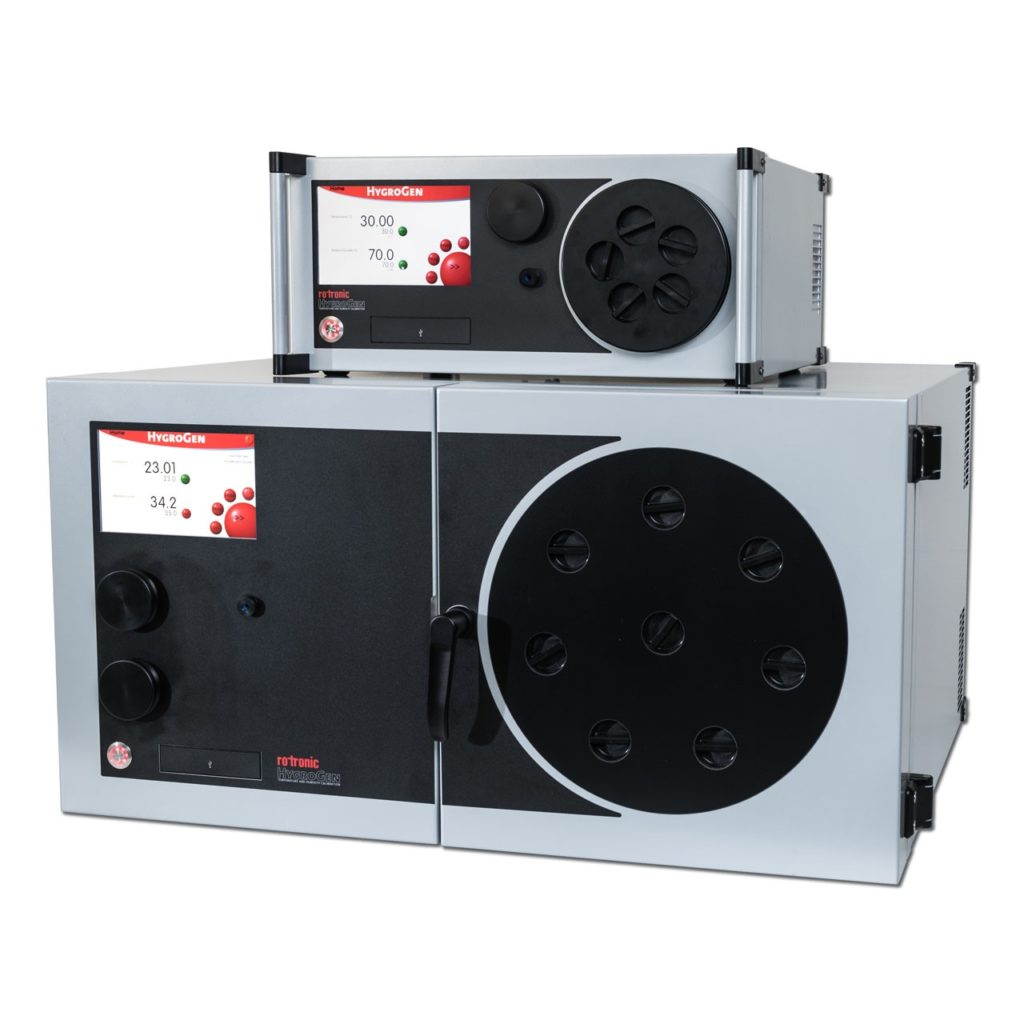
Humidity Generators
Humidity Generators create a controlled environment with a stable temperature. This is used to set up specific humidity conditions for accurate sensor calibration. It is also used in laboratories to investigate the influence humidity has on materials and surfaces.
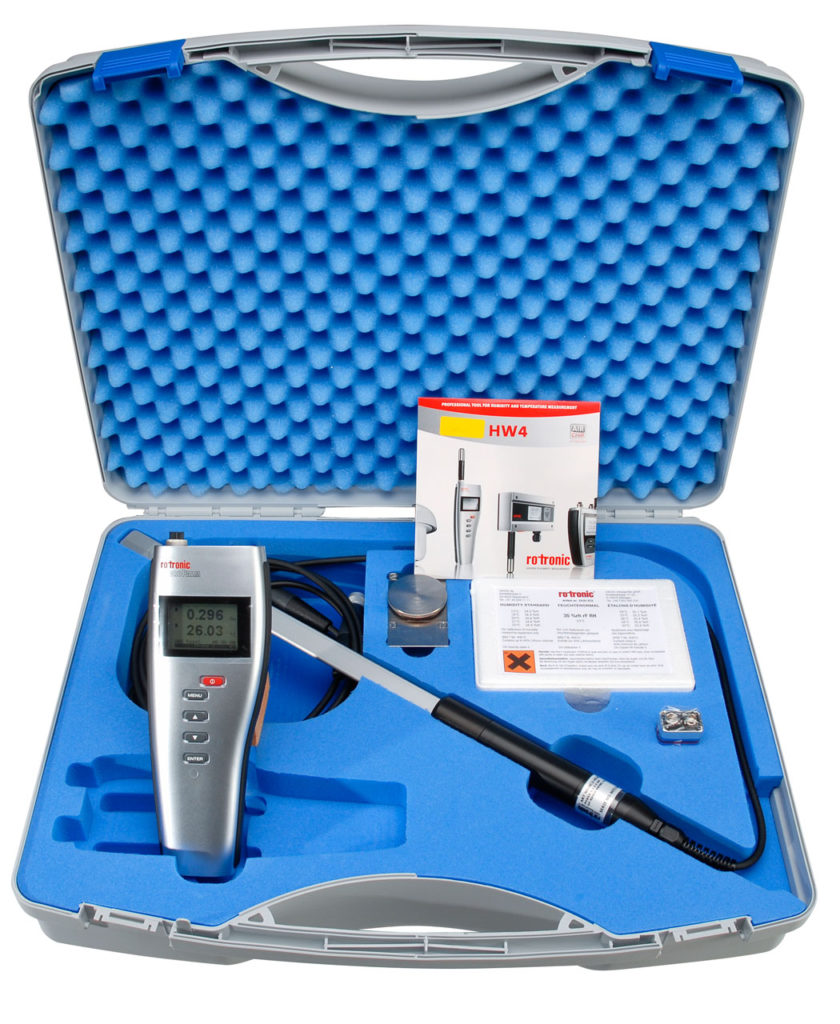
Humidity Handhelds
Humidity Handhelds measure and record temperature and humidity readings remotely. Ideal for verifying, calibrating, mapping, adjusting, and troubleshooting humidity applications.
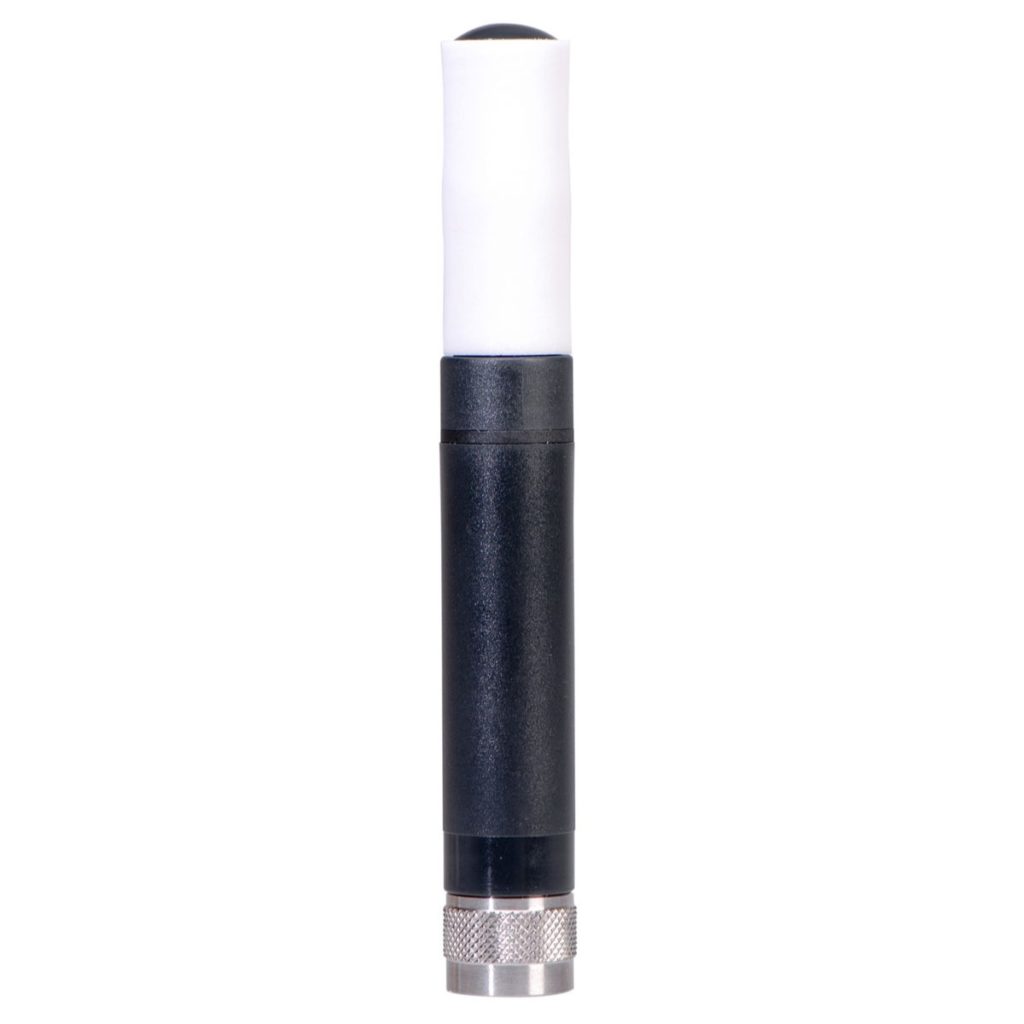
Humidity Sensors and Probes
Humidity Sensors and Probes range from simple plug-in probes for handhelds and data loggers to specialised sensors. Options are available for high-temperature and industrial applications.
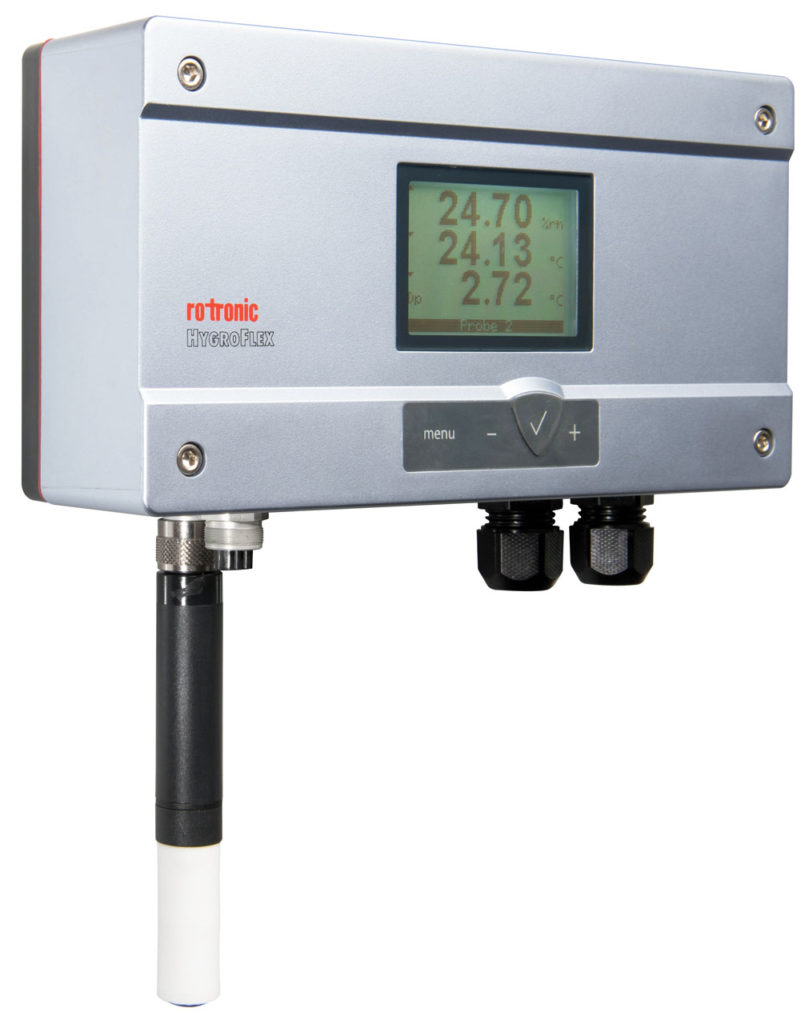
Humidity Transmitters
Humidity transmitters have sensors that measure temperature and humidity levels and then transmit the data to a central monitoring system.
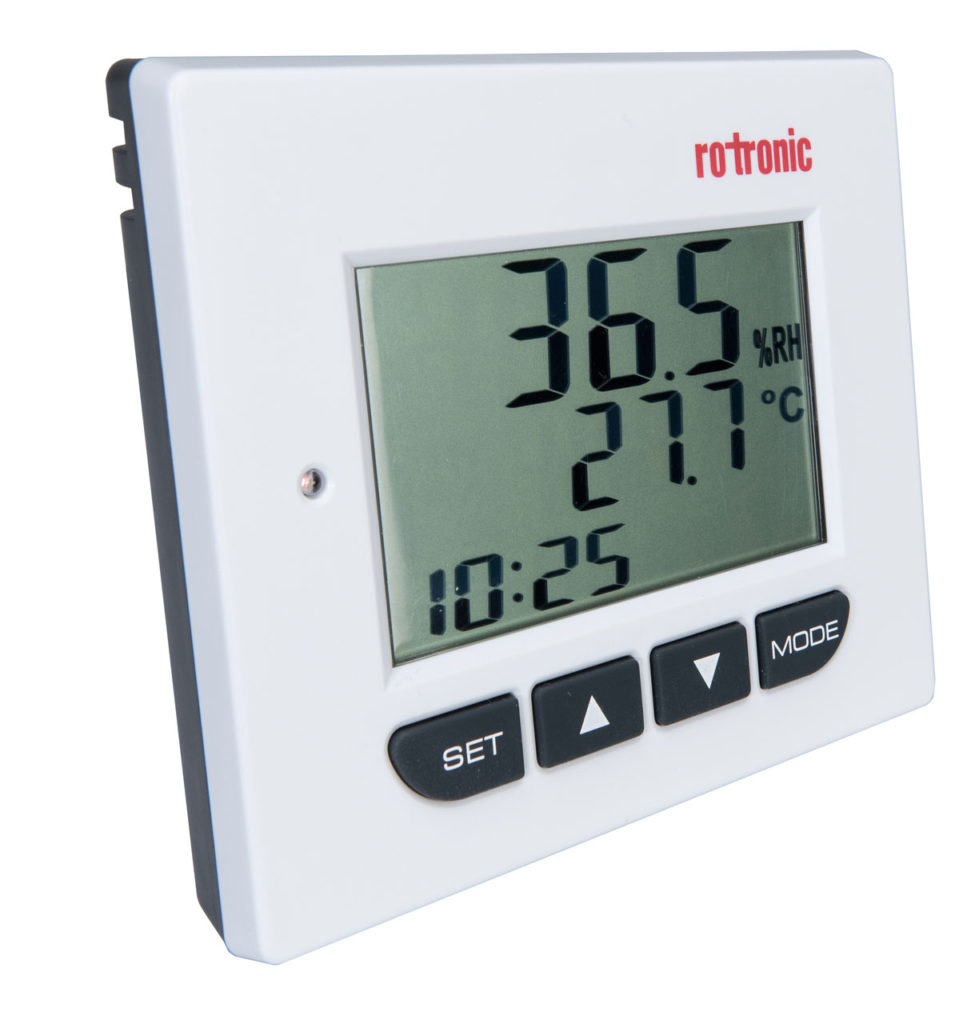
Relative Humidity Displays
Relative Humidity Displays display information about humidity. They are attached to a sensor and provide real-time humidity updates and information. Some humidity displays are digital while others use analog display dials. Ideal for labs or humidity-sensitive areas.
Selection of Hygrometer and Humidity Meters and Products
Products by Category
-

Coffee Pro Moisture Meter | TG-PRO
R8,500.00 ex vat -
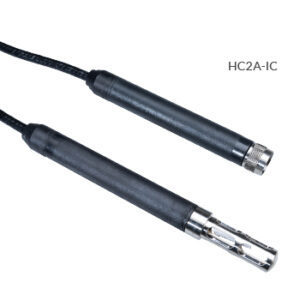
Demanding Environments Humidity and Temperature Probe | HC2A-IC
-

Digital Analogue Temperature and Humidity Transmitter | THS17
Price range: R2,136.00 through R2,681.00 ex vat -

Digital Humidity and Temperature Probe | PC62/62V
Price range: R10,043.00 through R12,030.00 ex vat -

Digital Thermo-hygrometer | PH1000
R295.00 ex vat -
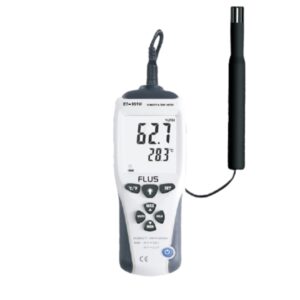
Economical Thermo-Hygrometer | ET-951W
R1,250.00 ex vat -

Economical Thermo-Hygrometer and Logger | TA622C
R1,895.00 ex vat -

Handheld Air Velocity, Humidity and Temperature Meter AFP1
R5,162.00 ex vat -

Handheld Humidity and Temperature | HygroPalm HP31
R10,230.00 ex vat