
Indicators
Indicators are visual display instruments and monitoring units designed to convert raw signals from sensors and transmitters into clear, readable numerical or graphical values. They display critical process parameters such as temperature, pressure, flow rate, voltage, level, force, and rotational speed. Indicators provide machine operators and plant engineers with real-time feedback on equipment health and process status.
Why Indicators Matter
Indicators are visual display instruments and monitoring units designed to convert raw signals from sensors and transmitters into clear, readable numerical or graphical values. They display critical process parameters such as temperature, pressure, flow rate, voltage, level, force, and rotational speed. Indicators provide machine operators and plant engineers with real-time feedback on equipment health and process status.
By presenting immediate visual data, indicators allow personnel to monitor operations, detect process anomalies instantly, trigger safety alarms, and make rapid operational adjustments without relying solely on centralised control systems. These instruments serve as a vital link between physical sensors and human decision-making.
Indicators Technology
Core technologies within this category range from traditional analogue pointer meters to sophisticated digital panel meters and microprocessor-based displays. Modern digital indicators feature bright LED or LCD screens capable of displaying multi-variable data, custom engineering units, and visual colour-changing alarms. Advanced indicators incorporate signal conditioning electronics to accept various input types, such as 4-20mA current loops, 0-10V signals, RTDs, and thermocouples. Many smart indicators also offer retransmission outputs, RS-485 Modbus communication, dynamic bar-graph displays, and programmable relay outputs to activate local audiovisual alarms or emergency shut-off systems when thresholds are exceeded.
Products by Category
-

Integrated Industrial Indicator | SD03
-

Integrated Signal Indicator | SD05
Price range: R1,827.00 through R1,910.00 ex vat -

Multi-Channel Load Cell Indicator | 9840 Calibration Grade
-
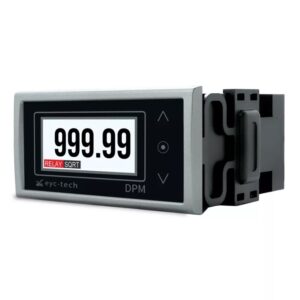
Multifunction Signal Display Monitor | DPM03
R2,782.00 ex vat -

Multifunction Signal Display Unit | DPM02
Price range: R1,516.00 through R3,675.00 ex vat -

Portable Force Sensor Display | 9325-NU
-

Signal Display Monitor | DPM11
Price range: R1,765.00 through R2,597.00 ex vat